
Cold-Pressed Mustard Oil: The Secret to Authentic Deshi Flavour
What gives khati sorishar tel its sharp bite, how to use it in everyday cooking and why the first heating matters.
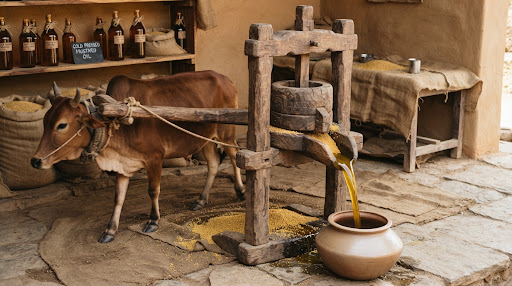
Most Bengali kitchens have a bottle of mustard oil within reach. The sharp, almost nose-tickling smell is what makes shorshe maach, alu bhorta and pickles taste the way they do.
1. Why it bites
That sharpness comes from the mustard seed itself. Oil that is pressed slowly and not refined keeps more of it. Heavily refined oil is milder, but it also loses the flavour people are looking for.
2. The first heating
For cooking, many families heat the oil until it just begins to smoke, then lower the flame. This takes away the raw edge and leaves the warm, nutty flavour. Do it with the window open and never leave the pan.
3. Where it works best
- Bhorta and mashed vegetables, added raw at the end.
- Fish and chicken curries, for the first fry.
- Pickles, where it acts as a natural cover over the fruit.
- Jhalmuri, a few drops over puffed rice.
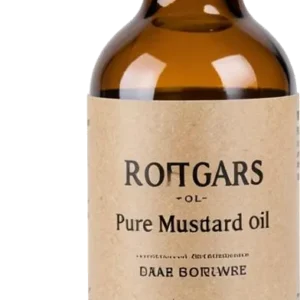
Khati Sorishar Tel
100% pure traditional wooden-ghani pressed Deshi mustard oil. (Pack size: 1 Litre)
Store the bottle in a cool, dark spot with the cap tight. A little cloudiness in cold weather is normal.
Discussion & Comments (0)
Be respectful and clearRelated Stories You Might Like
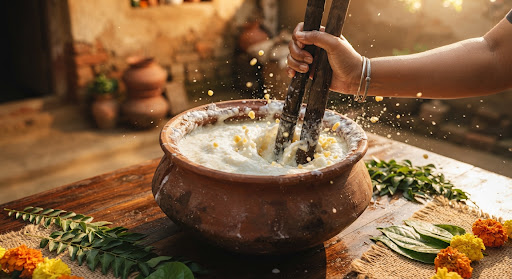
The Traditional Art of Hand-Churned Deshi Bilona Ghee: Why Purity Matters
How bilona ghee is made the slow way, and three simple checks you can try in your own kitchen before you trust…
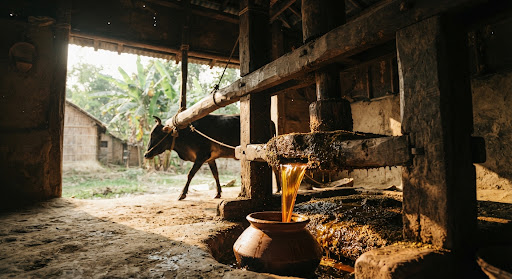
Cold Pressed Khati Mustard Oil: Why the Traditional Wooden Ghani Still Wins
A short look at how a wooden ghani presses oil, how it differs from factory refining, and how to read a bottle.
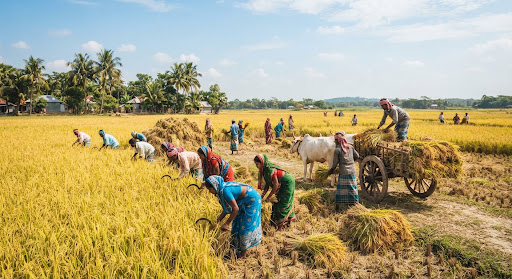
Chinigura Polao Rice Harvesting: From the Field to Your Table
Why Chinigura is harvested late, dried slowly and milled lightly, and what that does to the smell of your polao.

Leave a comment